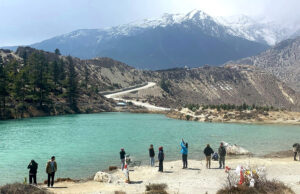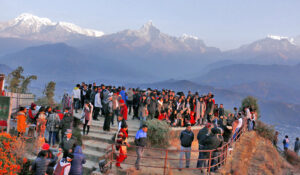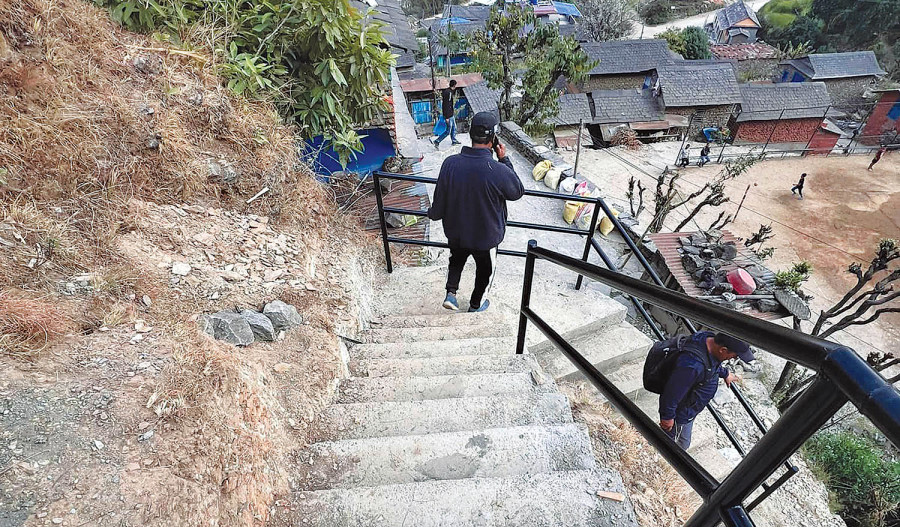
Baglung district is rapidly emerging as a promising trekking and hiking destination in Nepal, thanks to the development of new trekking trails aimed at promoting rural tourism and community development. In the last fiscal year alone, 53 trekking trails were constructed across the district to attract both domestic and international tourists—especially youths seeking short and accessible hiking experiences.
Trekking Trails Boost Rural Tourism in Baglung
Recognizing the role of rural tourism in strengthening local economies, local governments in Baglung invested between Rs1 million and Rs2 million per trail project. The Tourism and Industry Office of Gandaki Province provided a total of Rs66 million to support the construction of these trekking routes.
According to officials, these trails have significantly increased local participation in trekking and short hikes, making tourism more inclusive and community-oriented.
Teuwa Hiking Trail: A New Youth Favorite
One of the latest attractions is the hiking trail to Teuwa, where a statue of Gautam Buddha has been erected as part of the Open Sculpture Museum in Galkot Municipality.
This short and scenic hike has quickly gained popularity as a weekend activity.
Kot Ghar Trail: Linking History and Tourism
Another important trekking route connects Kot Ghar, the historic fortress of the Malla kings of Galkot, once part of the Chaubise Rajya (Confederation of 24 Kingdoms).
The renovation of Kot Ghar was jointly carried out by the Shreemeher Battalion of the Nepal Army and Galkot Municipality, transforming it into a key heritage tourism site.
Growing Popularity of Short Hiking Routes
Mahadev Sapkota, a local tourism entrepreneur, noted that the trekking trail from Baur (Kothekhola Rural Municipality–7) to Gumba has been drawing many locals. The trail is suitable for a two-day hiking trip, making it ideal for short adventures.
Prem Lamichhane, Chairman of Ward No. 9, Kothekhola Rural Municipality, said:
“We have been observing an influx of youth into trekking after the development of these trails.”
Similarly, Saurab Khatri, a youth from Ward No. 9 of Baglung Municipality, shared:
“For one- or two-day hikes, the trails are easy and attractive. There is a strong need to promote these destinations to bring more tourists.”
Homestays, Meditation Centers, and Religious Trails
According to Bishnu Nath Sharma, Information Officer at the Tourism and Industry Office of Galkot Municipality, trekking routes combined with homestay facilities have been particularly appealing to domestic tourists.
In addition to trails:
Tourism Infrastructure Development and Investment
In the last fiscal year:
Despite some concerns about delayed or unfinished small projects, 95% physical progress has been achieved, according to Paar Singh Thapa, Chief of the Tourism and Industry Office.
Major Tourism Investments in Baglung
Key investments include:
Need for Better Planning and Promotion
Amar Thapa, Chief of the District Coordination Committee, emphasized the need to avoid repetitive investments and ensure result-oriented projects:
“Authorities must be responsible to prevent duplication and focus on projects that yield real outcomes.”
A master plan has already been formulated to identify and develop key tourism sites, though some allocated budgets were frozen due to project delays.
Future Prospects of Tourism in Baglung
With improved trekking trails, restored heritage sites, homestays, and meditation centers, tourism arrivals in Baglung are expected to rise significantly in the coming years. Local governments continue efforts to preserve historical artifacts and promote sustainable tourism that benefits local communities.
Baglung is steadily positioning itself as a prime destination for short treks, cultural tourism, and youth-focused hiking experiences in Nepal.