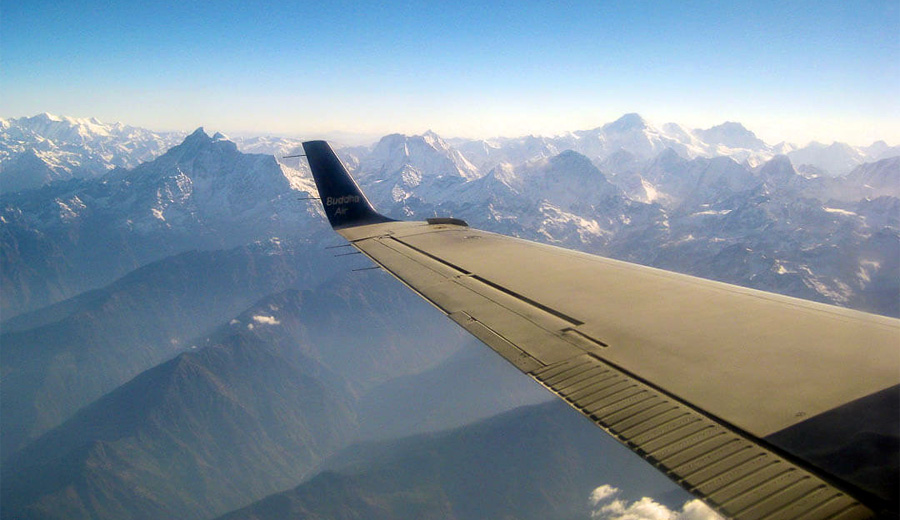
The towering peaks, deep valleys, and dramatic landscapes of the Himalayas attract adventure seekers and travelers from across the world. But before trekkers set foot on mountain trails and climbers begin their ascents, aircraft must first navigate through Nepal’s airspace — widely regarded as one of the most complex and demanding in the world.
From the viewpoint of air traffic controllers (ATCs), managing Nepal’s skies is both a privilege and a profound responsibility. Precision, resilience, and unwavering focus are essential as they coordinate the safe movement of aircraft across rugged terrain, unpredictable weather systems, and narrow mountain corridors. These professionals are the unseen guardians who ensure the safe passage of commercial airlines, scenic mountain flights, helicopter tours, and aircraft bound for remote Himalayan airstrips and base camps.
Why Is Nepal’s Airspace So Unique?
Nepal’s geography is among the most dramatic on Earth. The Himalayas rise sharply from river valleys, creating steep gradients, narrow gorges, and complex networks of ridges. Weather patterns change rapidly over short distances, producing sudden turbulence, unpredictable winds, and localized storms around mountain summits.
While this dramatic landscape offers unforgettable adventure tourism experiences, it also presents one of the most demanding aviation environments in the world. Airports like Lukla — famously known as the Gateway to Mount Everest — require exceptional precision during takeoff and landing. Its sloped runway leaves virtually no margin for error, demanding meticulous planning and perfect execution. In such locations, air traffic controllers play a vital role in coordinating flight operations, safety clearances, and real-time decision-making.
Communicating in a Complex Sky
At the heart of air traffic control lies precise and continuous communication. Every instruction — from altitude adjustments to route changes — forms part of a constantly evolving aerial picture. In Nepal, communication becomes even more critical due to unpredictable terrain and volatile weather.
Air traffic controllers monitor aircraft performance, listen for early signs of turbulence, and provide essential information, including:
Once aircraft are airborne, continuous tracking allows controllers to provide timely warnings about sudden wind shifts, fog development, or dangerous updrafts. In high-altitude flying, even a few seconds of early warning can be life-saving.
Technology Meets Rugged Terrain
Radar coverage in mountainous regions is often limited due to terrain obstructions. To overcome this challenge, Nepal’s aviation sector integrates ground radar, radio communications, and advanced satellite-based navigation systems such as ADS-B. These technologies enhance real-time aircraft tracking, even in regions where conventional radar cannot reach.
However, technology alone is not enough. Human expertise remains essential. Controllers with deep knowledge of mountainous aviation dynamics, weather behavior, and aircraft performance provide critical judgment that technology cannot replace.
Partnership Between Pilots and Controllers
Flying in the Himalayas demands extraordinary teamwork. Pilots operating in Nepal are specialists, intimately familiar with mountain winds, icing conditions, rapid cloud formation, and unpredictable turbulence. Communication between pilots and air traffic controllers becomes a true partnership, built on trust, experience, and shared responsibility.
When pilots request visual climbs through mountain passes, controllers carefully assess traffic density, wind data, and weather forecasts before granting clearance or offering safer alternatives. This dynamic collaboration ensures the highest possible levels of flight safety in extreme environments.
Protecting Adventure, Tourism, and Lives
Adventure tourism plays a vital role in Nepal’s economy. Scenic flights, helicopter tours, and remote airstrips connect isolated mountain communities to markets, healthcare, and essential services. Every successful flight supports livelihoods, promotes sustainable tourism, and brings economic opportunity to remote regions.
For air traffic controllers, there is deep fulfillment in knowing their work helps travelers realize lifelong dreams — whether it’s a trek to Everest Base Camp, a flight into Jomsom, or a breathtaking Himalayan aerial tour.
The Human Spirit in the Himalayan Skies
Flying among the world’s highest mountains is both exhilarating and humbling. For pilots, controllers, and travelers alike, it is a powerful encounter between human skill and nature’s raw force. Air traffic controllers stand quietly behind every safe landing and successful journey, ensuring that each flight through Nepal’s majestic skies is conducted with care, precision, and dedication.
“In a land where mountains touch the heavens, we stand guard to ensure that every ascent and descent connects people to adventure safely.”