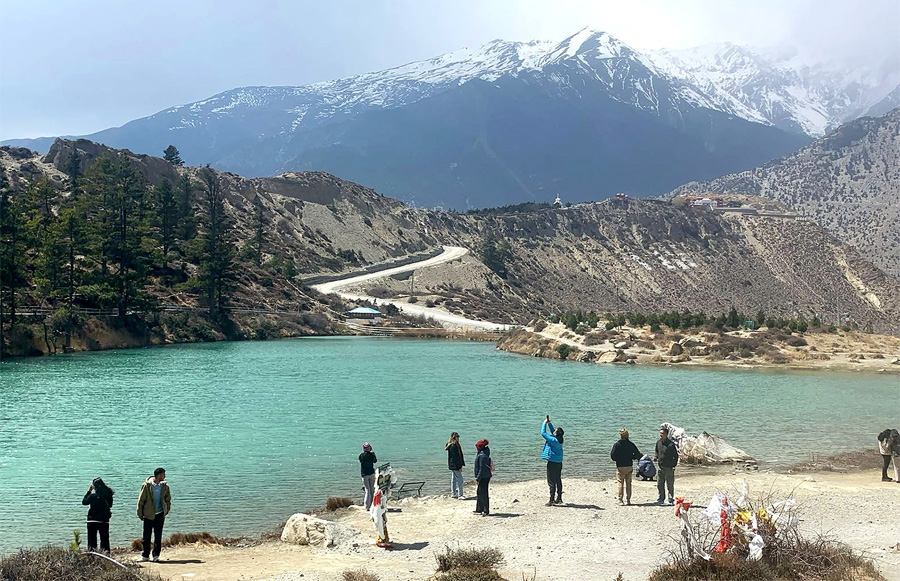
Dhumba Lake, located in Samle village of Gharpajhong Rural Municipality–5 in Mustang, has emerged as a major attraction for tourists this winter. Around the same time last year, in mid-January, the lake was completely frozen, and extreme cold made it difficult for visitors to reach the site.
This year, however, the absence of snowfall and comparatively mild winter conditions have made access much easier. The lake, which often freezes during winter, is flowing freely with its striking blue color, drawing large numbers of visitors.
Tourists, along with educational and institutional groups traveling to Mustang, have increasingly chosen Dhumba Lake as a destination for relaxation and sightseeing. As a result, the area has witnessed notable tourism activity even in January, which is typically considered the off-season.
According to Ward Chairperson Pradeep Thakali, around 150 tourists visit Dhumba Lake daily. The lake lies about five kilometers west of Jomsom, along the Beni–Jomsom road. Thakali stated that the lake has not frozen this year, and the cold is not as severe as in previous winters, allowing a steady flow of visitors.
Domestic and international tourists are required to pay an entry fee of Rs. 30 to Rs. 50 to observe the lake.
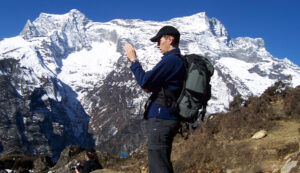
Situated at an altitude of 2,830 meters above sea level at the base of Mount Nilgiri, Dhumba Lake has become a key attraction for travelers heading toward the Korala border of Upper Mustang. Many tourists visit the lake during winter while returning from the sacred Muktinath Temple, one of Nepal’s most popular religious sites.
During peak seasons, the area receives up to 500 tourists per day, although visitor numbers decline during the monsoon. The rise in winter tourism has positively impacted local tourism entrepreneurs.
Dhumba Lake measures approximately 10 meters in depth, 130 meters in width, and 160 meters in length. During special worship ceremonies at the Kuchhap Terga Monastery, associated with Buddhist master Padmasambhava, devotees release fish into the lake and perform rituals using its water.
The lake is owned by the Kuchhap Terga Monastery Management Committee, and Buddhist followers consider its water sacred, offering it in bowls before Buddha statues. Every year, concerned authorities release various species of fish into the lake to maintain its ecological balance.
Staff members are deployed regularly for sanitation, feeding fish, and ensuring conservation. Conservation efforts are supported by Gharpajhong Rural Municipality, the provincial government, and the Annapurna Conservation Area Project (ACAP) office in Jomsom.
A walk around the lake from the entrance takes about 10 minutes. Gharpajhong Rural Municipality Chairperson Mohan Singh Lalchan stated that Dhumba Lake uniquely connects religious, cultural, and tourism sectors. Authorities allow visitors to photograph the frozen surface of the lake due to its religious importance, but entry into the lake for photos or videos is strictly prohibited.