Kanchenjunga
22 Days
Moderate to Challenging
2-30 Persons
5364m.
Spring and Autumn
Trekking / Hiking
Hotel & Tea House
Breakfast, Lunch & Dinner
Private Vehicle and Flight
Kathmandu
Kathmandu
Kanchenjunga Trekking is a remote, wild, and exhilarating adventure that offers trekkers a unique experience in the lap of the Himalayas. Named after Kanchenjunga Peak (8,586m), the third-highest mountain in the world, this trek is located in the Taplejung District of north-eastern Nepal, bordering Sikkim and Tibet.
This trekking region is famous for its three beautiful river valleys—Simbua Khola, Ghunsa, and Tamur—and in 1997, the government of Nepal, with support from WWF, declared the area a “Gift to the Earth.” The trek offers stunning views of the Kanchenjunga massif, diverse landscapes, dense forests of rhododendrons, pines, orchids, and oak, and pristine glacial streams.
The trek is within the Kanchenjunga Conservation Area (2,035 sq. km), where you can encounter rare flora and fauna, including red pandas, snow leopards, Asiatic black bears, and Himalayan tahr. This region is also culturally rich, home to Limbus, Sherpas, Rais, Chhetris, and Brahmins, with centuries-old monasteries, chortens, and prayer walls reflecting the area’s spiritual heritage.
Kanchenjunga Trekking is a moderately to highly challenging adventure, ranging from 1,200 meters (4,000 ft) to 5,180 meters (17,000 ft) in altitude, where you will traverse rivers, valleys, forests, alpine meadows, and high-altitude glaciers.
Arrive in Bhadrapur, the gateway to eastern Nepal. Explore the town known as the “Tea City of Nepal,” observe local rice cultivation, markets, and enjoy your overnight stay.
Drive along Mechi Highway via Ilam, the “Queen of Hills,” and Phidim. Enjoy scenic tea gardens, terraced fields, and lush landscapes before reaching Suketar, where the trek begins. Overnight in Suketar.
Start the trek with descents and ascents along rivers and terraced fields. Pass through Mitlung, Sinwa, and Tawa, crossing Hungdewa Khola and Tamur River. Overnight in Chirwa.
Follow the Tamur Nadi valley to Sekathum, witnessing a gradual change in scenery. Enjoy the serene environment and overnight at Sekathum.
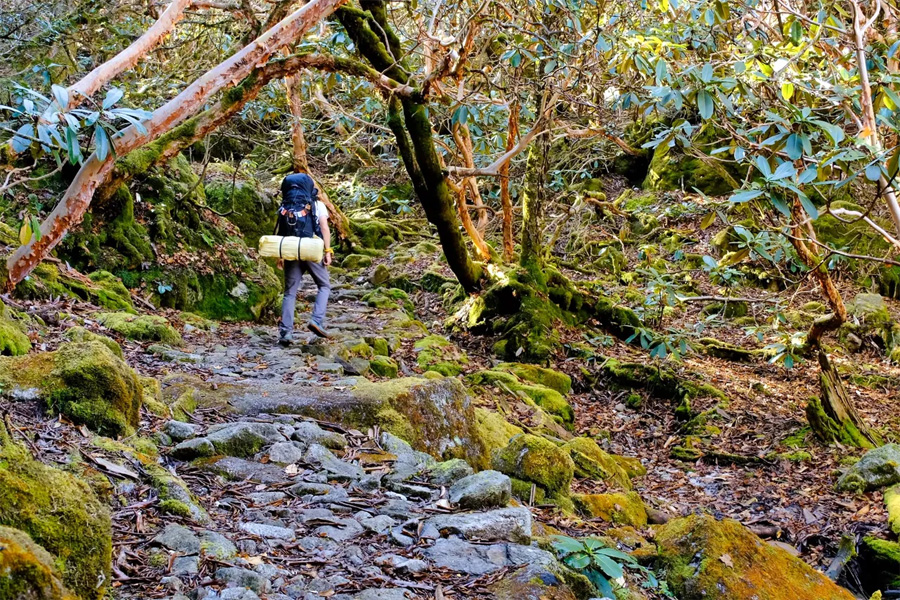
Trek through dense forests of bamboo, rhododendron, and oak. Climb to Gyabla, enjoying panoramic mountain views along the way. Overnight in Gyabla.
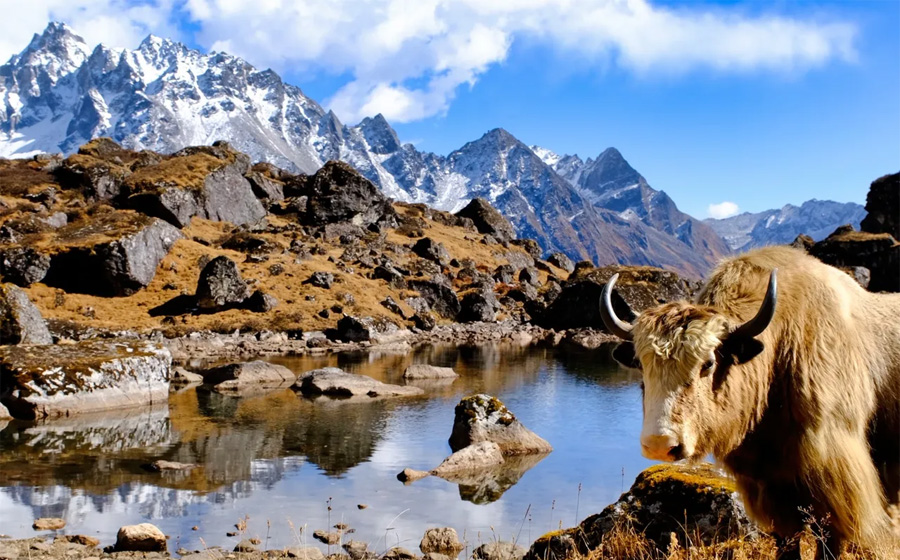
Cross the 3,000m mark, walking through rhododendron and fir forests. Visit Pholey Tibetan village, its monastery, and yak pastures. Reach Ghunsa village for overnight stay.
Acclimatize by hiking to nearby ridges and visiting Lpasan La Monastery, preparing your body for higher altitudes.
Trek through larch and juniper forests, cross Rambuk Kharka (3,720m), and witness Mt. Jannu Glacier. Overnight at Khambachen.
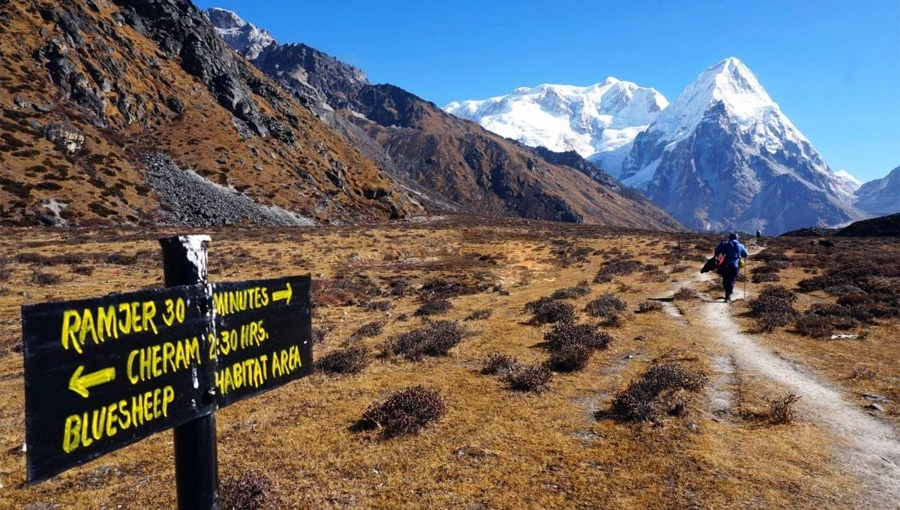
Enter a barren, high-altitude landscape. Cross Ramtang and Lhonak glaciers, enjoy alpine meadows, and spot wildlife like blue sheep and marmots. Overnight in Lhonak tents.
Explore Ramche and approach the South Base Camp of Kanchenjunga. Marvel at the panoramic views of Kanchenjunga peaks (8,586m, 8,420m, 8,474m). Return to Lhonak.
Retrace the route from Lhonak to Ghunsa, enjoying new perspectives of the Himalayan vistas. Overnight at Ghunsa.
Leave Ghunsa, trek through rhododendron and juniper forests to the isolated settlement of Selele. Keep an eye out for wildlife. Overnight at Sele Le.
Cross Mirgin La Pass (4,480m), enjoy alpine vistas and eagles soaring above. Overnight at Tseram.
Trek to the Yalung Glacier viewpoint and pass through Lapsang to reach Ramche. Overnight at Ramche.
Explore Yalung Glacier and the South Base Camp. Enjoy views of Kanchenjunga’s south face, Rathong, Kabru, and frozen lakes. Return to Tseram for overnight stay.
Descend through rhododendron and pine forests along Simbuwa Khola. Overnight at Torongten.
Trek through lush villages and farmland. Overnight at a local teahouse.
Walk past Delok and Khesewa, enjoy terraced fields and waterfalls, reaching the village of Phumpe Danda. Overnight stay.
Descend and ascend along terraced fields, crossing Takshewa Khola. Overnight at Kande Bhanjang.
Cross oak forests, explore Simbu village with views of Makalu, and overnight at Lail Kharka.
A short 2-hour trek through forested ridges to Suketar. Explore the village and enjoy the last evening of the trek. Overnight at Suketar.
Fly from Suketar to Biratnagar and onward to Kathmandu. Transfer to the hotel or airport depending on your schedule.
Interested in this trip? Start planning your adventure today!
| Start Date | End Date | Price | Status | Booking |
|---|---|---|---|---|
| Sorry, no fixed departure dates are available. Please request a
| ||||
| Start Date | End Date | Price | Status | Booking |
|---|---|---|---|---|
| Sorry, no fixed departure dates are available. Please request a
| ||||
| Start Date | End Date | Price | Status | Booking |
|---|---|---|---|---|
| Sorry, no fixed departure dates are available. Please request a
| ||||
| Start Date | End Date | Price | Status | Booking |
|---|---|---|---|---|
| Sorry, no fixed departure dates are available. Please request a
| ||||
| Start Date | End Date | Price | Status | Booking |
|---|---|---|---|---|
| Sorry, no fixed departure dates are available. Please request a
| ||||
| Start Date | End Date | Price | Status | Booking |
|---|---|---|---|---|
| Sorry, no fixed departure dates are available. Please request a
| ||||
| Start Date | End Date | Price | Status | Booking |
|---|---|---|---|---|
| Sorry, no fixed departure dates are available. Please request a
| ||||
| Start Date | End Date | Price | Status | Booking |
|---|---|---|---|---|
| Sorry, no fixed departure dates are available. Please request a
| ||||
| Start Date | End Date | Price | Status | Booking |
|---|---|---|---|---|
| Sorry, no fixed departure dates are available. Please request a
| ||||
| Start Date | End Date | Price | Status | Booking |
|---|---|---|---|---|
| Sorry, no fixed departure dates are available. Please request a
| ||||
| Start Date | End Date | Price | Status | Booking |
|---|---|---|---|---|
| Sorry, no fixed departure dates are available. Please request a
| ||||
| Start Date | End Date | Price | Status | Booking |
|---|---|---|---|---|
| Sorry, no fixed departure dates are available. Please request a
| ||||
March–May and September–November are ideal for clear views and pleasant weather.
Moderate to strenuous due to remote trails, long trekking days, and high-altitude passes.
Not recommended for first-time trekkers; some prior trekking experience is suggested.
Yes, though basic, with some sections requiring camping in tents.
Yes, Kanchenjunga Special Permit and Kanchenjunga Conservation Area Permit are required.